

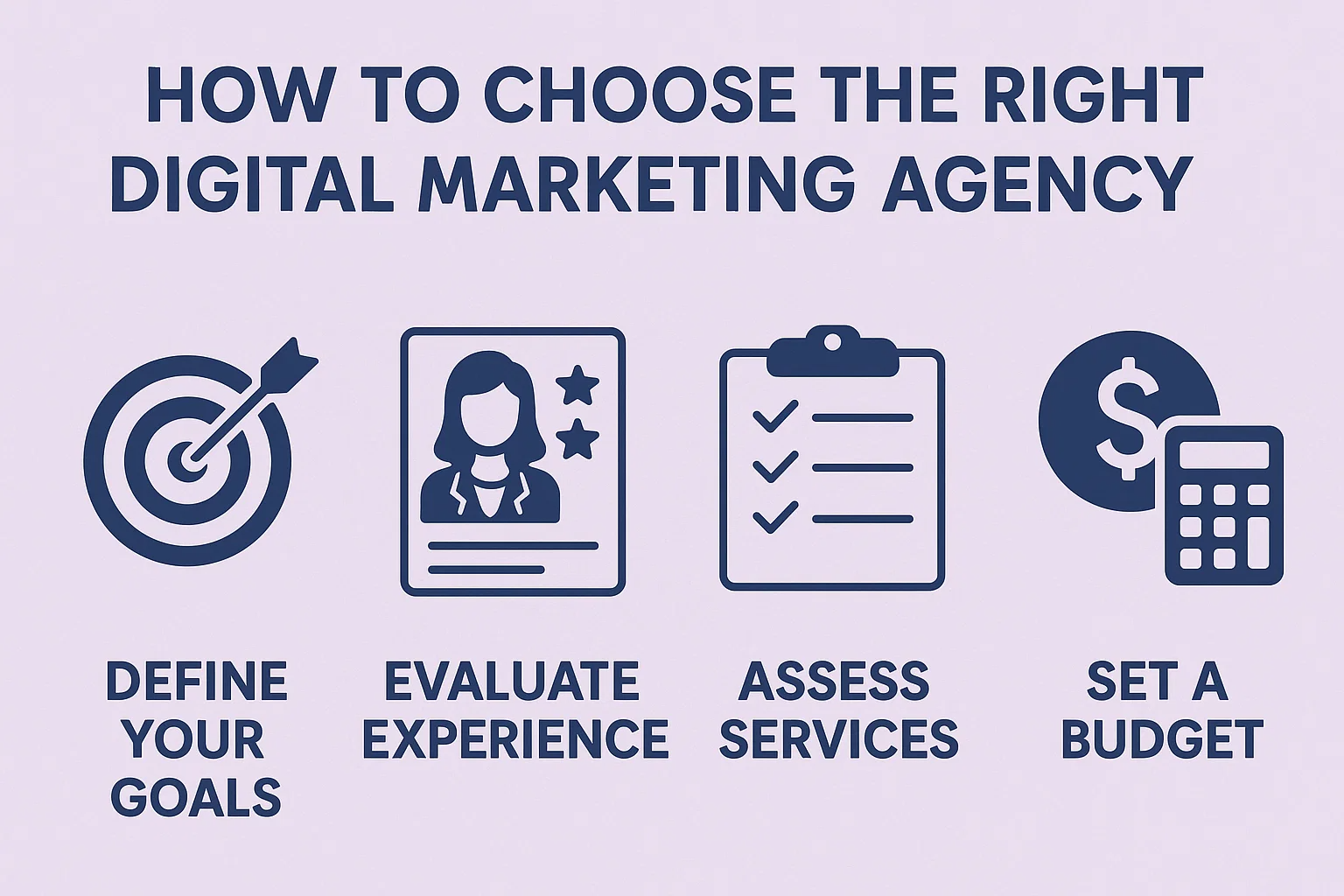
In today’s fast-paced digital-first world, businesses cannot afford to ignore the power of online marketing. Whether you are a startup trying to build your brand presence, a mid-sized business aiming for growth, or an established enterprise looking to dominate your niche, having the right digital marketing agency by your side can make all the difference. But here’s the challenge—how do you actually choose the right digital marketing agency from the countless options available in the market?
This guide walks you through everything you need to know about selecting the perfect agency for your business. From understanding your business goals to evaluating expertise, pricing, and culture fit, we’ll cover it all step by step.
Why Choosing the Right Digital Marketing Agency Matters
The decision to hire a digital marketing agency is not just about outsourcing your marketing tasks. It’s about finding a long-term partner who can help shape your brand, bring in consistent leads, and scale your business. The wrong agency can waste both your money and time, while the right one can fuel exponential growth.
Some key benefits of the right digital marketing agency:
- Access to specialized skills (SEO, PPC, content, social media, design, analytics, etc.)
- Cost-effective compared to building an in-house team.
- Scalability depending on your campaigns and budget.
- Access to advanced tools, technology, and proven strategies.
- Consistent results backed by data and performance tracking.
Now, let’s dive deeper into the step-by-step process of choosing the right digital marketing agency.
Summary Table: Roles & Pay Scale in Digital Marketing Agencies
| Role | Experience | Education | Estimated Salary (₹) |
|---|---|---|---|
| SEO Executive | 0–2 yrs | Graduate / Digital Marketing cert | 2–4 lakh/year |
| Social Media Manager | 2–4 yrs | Graduate (Marketing preferred) | 4–7 lakh/year |
| Content Writer / Copywriter | 0–3 yrs | Graduate (English/Journalism) | 2.5–5 lakh/year |
| PPC / Performance Marketing Exec | 1–3 yrs | Graduate + Google Ads cert | 3–6 lakh/year |
| Digital Marketing Strategist | 3–6 yrs | Graduate + SEO/SEM expertise | 6–12 lakh/year |
| Creative Designer (Digital Ads) | 2–5 yrs | Design Graduate | 4–8 lakh/year |
| Marketing Analytics Specialist | 3–6 yrs | Graduate (Stats/Analytics) | 7–12 lakh/year |
| Account Manager (Client Servicing) | 4–8 yrs | Graduate + MBA (advantage) | 8–15 lakh/year |
| Digital Marketing Director | 8–12 yrs | Graduate / MBA in Marketing | 15–30 lakh/year |
Step 1: Define Your Goals and Needs Clearly
Before even approaching any agency, you need clarity about what you want. Digital marketing is a broad umbrella with various services, such as:
- Search Engine Optimization (SEO): Improving your organic ranking on Google.
- Pay-Per-Click (PPC): Paid ads on Google, Facebook, Instagram, LinkedIn, etc.
- Social Media Marketing: Building your brand presence across platforms.
- Content Marketing: Blogs, videos, podcasts, infographics, and more.
- Email Marketing: Lead nurturing and customer retention.
- Web Design & Development: Creating optimized, user-friendly websites.
Ask yourself:
- Do you want brand awareness, lead generation, or direct sales?
- Do you need a complete marketing strategy or just one service?
- What is your monthly or yearly budget?
When your goals are clear, you’ll find it much easier to filter agencies that specialize in your required areas.
Step 2: Look for Specialized Expertise
Not all agencies are created equal. Some are full-service, while others are specialized. Depending on your needs, you might prefer one over the other.
- Full-Service Agencies: Handle everything under one roof. Great for businesses that want an integrated strategy.
- Specialized Agencies: Experts in one or two fields (e.g., SEO-focused or social media-focused). Perfect if you want targeted expertise.
When evaluating agencies, check:
- Case studies showcasing their expertise.
- Industries they have worked with (do they understand your niche?).
- Certifications (e.g., Google Ads Partner, HubSpot certified, Meta Business Partner).
An agency with a proven track record in your industry can cut down the learning curve and deliver faster results.
Step 3: Check Their Online Presence and Credibility
The simplest way to judge an agency’s capabilities is by looking at their own online presence.
- Website Quality: Does their website look modern, responsive, and professional?
- Content Strategy: Do they regularly publish valuable blogs, videos, or podcasts?
- SEO Rankings: Are they ranking for digital marketing-related keywords?
- Social Media Activity: Are they consistent and engaging on social platforms?
If an agency cannot market itself effectively, how will it do the same for your business?
Also, check reviews and testimonials:
- Google My Business reviews.
- Clutch, G2, or Trustpilot ratings.
- Case studies with measurable results.
- Client video testimonials (more authentic than text-based ones).
Step 4: Understand Their Strategy and Process
A reliable digital marketing agency won’t jump straight into execution. They’ll first try to understand your business, audience, and competitors.
Ask these questions:
- How do you approach a new project?
- Do you provide a detailed strategy before execution?
- How do you measure success (KPIs)?
- Which tools do you use for tracking campaigns?
Red flags:
- Agencies that promise instant results (e.g., “#1 on Google in 30 days”).
- Lack of transparency in process.
- No clear measurement of ROI.
The right agency should offer a data-driven approach and show you how they will track metrics like leads, conversions, and revenue—not just “likes” and “followers.”
Step 5: Evaluate Their Communication and Reporting
Communication is the backbone of any successful agency-client relationship. If communication is poor at the start, it will likely get worse later.
Things to look for:
- Dedicated Account Manager: One point of contact for smoother communication.
- Regular Updates: Weekly or monthly calls, plus email reports.
- Dashboard Access: Some agencies give real-time access to campaign dashboards.
The reporting style should be clear and easy to understand. A good agency explains numbers in business terms (ROI, leads, sales) rather than overwhelming you with vanity metrics.
Step 6: Compare Pricing and Contracts
Budget is always a major factor when choosing a digital marketing agency. But remember, cheapest is rarely the best.
Agencies may charge in different ways:
- Monthly Retainer: Fixed monthly fee for a package of services.
- Project-Based: One-time campaigns or website builds.
- Hourly Rate: For consulting or smaller tasks.
- Performance-Based: Pay only when results are achieved (rare, but growing).
Tips:
- Avoid long lock-in contracts without trial periods.
- Ask for transparent pricing breakdown.
- Check if there are hidden costs (ad spend, software fees, extra revisions).
The right agency should balance affordability with quality—not overpromise cheap services that lead to underperformance.
Step 7: Assess Their Team and Culture Fit
Beyond skills, it’s important that the agency aligns with your company culture. You’ll be working closely with them, so compatibility matters.
- Do they listen to your ideas and concerns?
- Are they proactive with suggestions?
- Do they share similar values about customer experience?
- Are they flexible to adapt to your workflow?
Sometimes, even the most technically skilled agency may not be a good fit if their culture clashes with yours. Look for a long-term partnership mindset.
Step 8: Request a Proposal or Audit
Before signing a deal, ask for a customized proposal or a free audit of your digital presence.
A good proposal should include:
- Your current performance analysis.
- Suggested strategies tailored to your goals.
- Project timeline and deliverables.
- Estimated budget and expected ROI.
This will show you how well they understand your business. Be cautious if the proposal is generic and copy-pasted—it means they haven’t invested time in understanding your brand.
Step 9: Start Small with a Trial Project
Don’t commit your entire marketing budget at once. Instead, test the agency with a smaller project:
- Run a 1–2 month PPC campaign.
- Outsource SEO audits and a few content pieces.
- Try social media ad campaigns.
This way, you can evaluate their performance, communication, and reporting before scaling up.
Step 10: Look for Long-Term Value, Not Just Short-Term Wins
Digital marketing is not an overnight success—it’s about building sustainable growth. The right agency should focus not only on immediate results but also on long-term brand building.
They should help you with:
- Building authority in your niche.
- Creating evergreen content.
- Improving customer retention through email and loyalty programs.
- Scaling campaigns based on data insights.
Agencies that focus only on vanity metrics may give short-term boosts but won’t build sustainable business growth.
Common Mistakes to Avoid When Choosing an Agency
- Going with the cheapest option – Quality comes at a price.
- Not checking references – Always speak to their past or current clients.
- Falling for unrealistic promises – “Guaranteed rankings in 2 weeks” is a scam.
- Ignoring contract details – Always read the fine print before signing.
- Not aligning goals – Ensure both sides agree on KPIs and success metrics.
Final Thoughts
Choosing the right digital marketing agency is a critical decision that can define the success of your online business. Take the time to do your homework—define your goals, research agencies thoroughly, check their credibility, and test their services before committing long-term.
Remember, the best agency is not the one with the fanciest office or the lowest price, but the one that understands your business, aligns with your vision, and consistently drives measurable results.
