
In today’s technology-driven world, digital marketing has become one of the fastest-growing career options. Every business, whether small or large, relies on digital platforms to connect with its audience, promote products, and build brand awareness. As more companies shift from traditional marketing to online strategies, the demand for digital marketing professionals is skyrocketing.
But how do you start a career in digital marketing? What skills do you need, and how can you grow in this competitive field? In this detailed guide, we’ll walk you through everything you need to know about building a successful career in digital marketing—step by step.
1. Understanding Digital Marketing
Digital marketing refers to promoting products, services, or brands using online platforms and digital technologies. Unlike traditional marketing (newspapers, TV ads, billboards), digital marketing uses tools such as websites, social media, emails, mobile apps, and search engines to reach targeted audiences.
Key Components of Digital Marketing:
- Search Engine Optimization (SEO) – Optimizing websites to rank higher in search engine results.
- Content Marketing – Creating valuable content (blogs, videos, infographics) to engage audiences.
- Social Media Marketing (SMM) – Promoting brands on platforms like Facebook, Instagram, LinkedIn, and X (Twitter).
- Pay-Per-Click (PPC) Advertising – Running paid ads on Google Ads, social platforms, etc.
- Email Marketing – Sending newsletters and promotions directly to customers’ inboxes.
- Affiliate Marketing – Earning commissions by promoting other companies’ products.
- Analytics & Data – Tracking, measuring, and analyzing campaign performance.
Digital marketing is not just one job—it’s a combination of skills and specializations.
2. Why Choose a Career in Digital Marketing?
The digital marketing industry is booming for several reasons:
- High Demand – Businesses need digital marketers to stay competitive.
- Diverse Career Paths – SEO specialist, social media manager, PPC expert, content strategist, and more.
- Flexibility – Many jobs allow remote or freelance opportunities.
- Creative + Analytical Balance – It’s perfect for both creative thinkers and data-driven minds.
- Great Salary Potential – As skills improve, earning potential increases significantly.
- Constant Learning – The digital landscape evolves quickly, offering continuous growth.
According to industry reports, digital marketing jobs are expected to grow by over 10% annually worldwide, making it one of the most future-proof careers.
Summary Table: Roles & Pay Scale in Digital Marketing
| Role | Experience | Education / Skills | Estimated Salary (₹) |
|---|---|---|---|
| Digital Marketing Intern | 0–1 yr | Graduate / Basic SEO, Social Media | 8,000–15,000/mo (Internshala, LinkedIn) |
| SEO Executive | 0–2 yrs | Graduate / SEO tools (Ahrefs, SEMrush) | 2–3.5 lakh/year (Naukri, Indeed) |
| Social Media Manager | 1–3 yrs | Graduate / Content & Ads skills | 3–5 lakh/year (Glassdoor, Indeed) |
| Content Marketing Specialist | 2–4 yrs | Graduate / Copywriting, Blogging | 3.5–6 lakh/year (LinkedIn, TimesJobs) |
| PPC / Google Ads Specialist | 2–4 yrs | Graduate / Google Ads Certified | 4–7 lakh/year (Naukri, Shine) |
| Email Marketing Specialist | 2–4 yrs | Graduate / Automation tools (Mailchimp, HubSpot) | 3–6 lakh/year (Indeed, LinkedIn) |
| Digital Marketing Analyst | 3–5 yrs | Graduate / Analytics & Reporting | 5–8 lakh/year (Glassdoor, LinkedIn) |
| Digital Marketing Manager | 4–8 yrs | Graduate / Full-stack marketing | 6–12 lakh/year (Naukri, Shine) |
| Performance Marketing Manager | 5–8 yrs | Graduate / Paid Ads, Strategy | 8–15 lakh/year (LinkedIn, Glassdoor) |
| Head of Digital Marketing / CMO | 8–12 yrs | Graduate / MBA Preferred | 15–30 lakh/year (LinkedIn, Naukri) |
3. Skills You Need to Build a Career in Digital Marketing
Digital marketing requires a combination of technical, creative, and soft skills.
Core Skills:
- SEO knowledge (on-page, off-page, technical SEO)
- Content creation (writing, video editing, storytelling)
- Social media strategy (paid + organic growth)
- Analytics tools (Google Analytics, SEMrush, Ahrefs)
- Advertising platforms (Google Ads, Facebook Ads, LinkedIn Ads)
- Email marketing tools like Mailchimp or HubSpot
- Basic web design (WordPress, landing page creation)
Soft Skills:
- Creativity & innovation
- Communication & storytelling
- Analytical thinking
- Problem-solving
- Adaptability to fast-changing trends
Developing these skills will set you apart in the job market.
4. Educational Path: Do You Need a Degree?
One of the biggest advantages of digital marketing is that you don’t necessarily need a formal degree. While a degree in marketing, business, or communications is helpful, it’s not mandatory. Many professionals enter the field through online courses, certifications, and hands-on experience.
Recommended Certifications:
- Google Digital Marketing & E-commerce Certificate
- HubSpot Inbound Marketing Certification
- Facebook Blueprint Certification
- SEMrush SEO Toolkit Course
- Coursera & Udemy digital marketing courses
These certifications not only teach you industry-relevant skills but also add credibility to your resume.
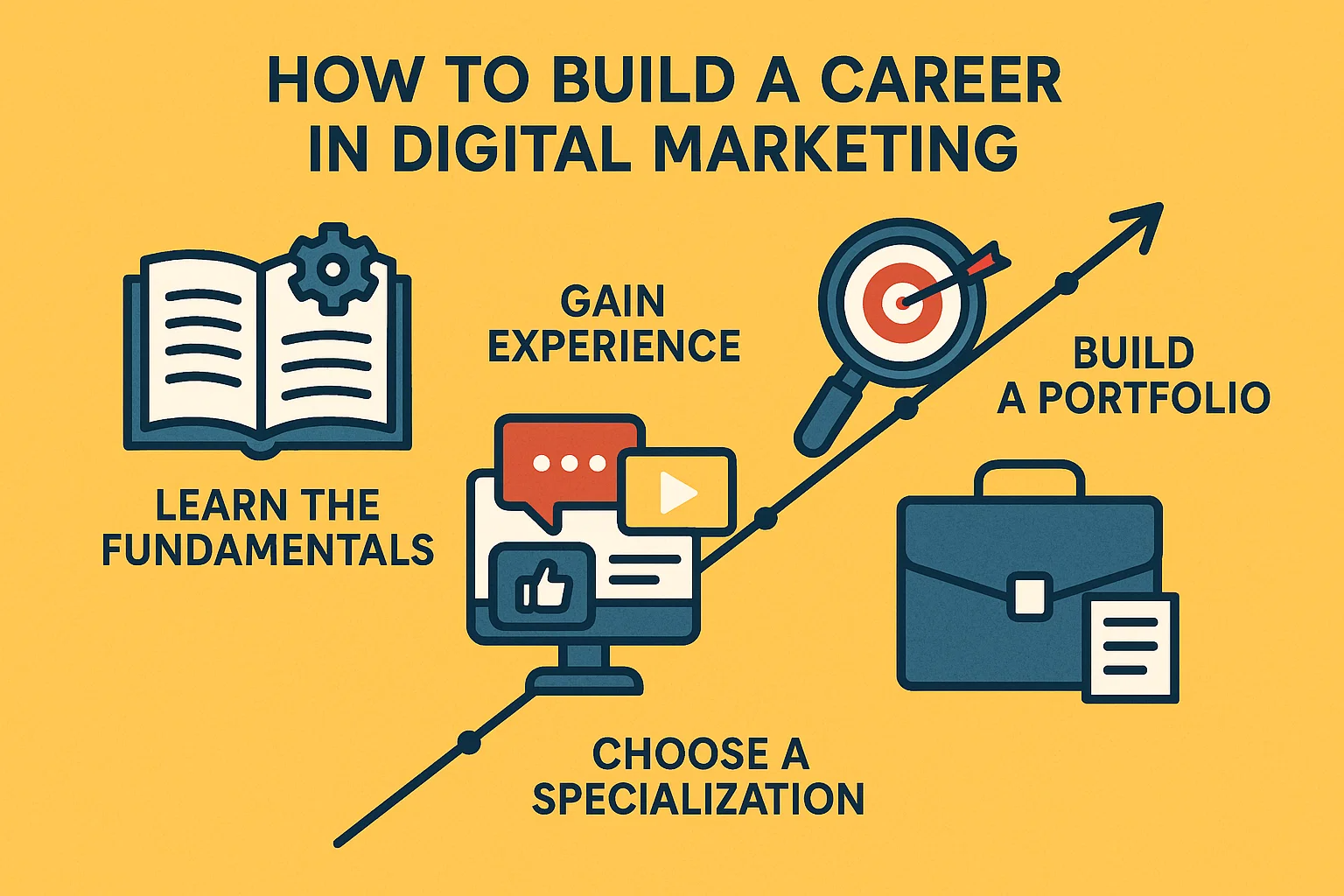
5. Guide to Starting a Career in Digital Marketing
Step 1: Learn the Basics
Start by understanding the fundamentals of SEO, social media, content creation, and analytics. Free resources (like Google Digital Garage, HubSpot Academy) are a great place to begin.
Step 2: Pick a Specialization
While it’s important to be a generalist in the beginning, specializing in one area makes you more valuable. For example:
- If you love writing → focus on Content Marketing & SEO.
- If you enjoy numbers → explore PPC and Analytics.
- If you’re creative → choose Social Media Marketing.
Step 3: Build Your Own Brand
Create a personal blog, LinkedIn profile, or YouTube channel to showcase your skills. For example, write blogs about SEO tips or post case studies of campaigns you run.
Step 4: Gain Hands-On Experience
Take internships, freelance projects, or part-time roles to apply your knowledge in real-world scenarios. Many small businesses are eager to hire digital marketers on a budget, giving you a chance to grow.
Step 5: Stay Updated
Digital marketing changes daily—Google updates algorithms, new social platforms rise, AI tools enter the market. Follow blogs like Moz, Neil Patel, and Search Engine Journal to stay ahead.
Step 6: Network & Connect
Join LinkedIn groups, attend webinars, and participate in digital marketing communities. Networking often leads to job opportunities.
Step 7: Apply for Jobs or Start Freelancing
Once you have skills and a portfolio, apply for jobs such as:
- Digital Marketing Executive
- SEO Analyst
- Content Strategist
- Social Media Manager
- PPC Campaign Manager
Alternatively, you can start freelancing on platforms like Fiverr, Upwork, or Freelancer.
6. Career Opportunities in Digital Marketing
Digital marketing offers diverse career paths. Let’s explore the main roles:
- SEO Specialist – Focuses on optimizing websites for search engines.
- Content Marketer – Creates blogs, videos, podcasts, and guides.
- Social Media Manager – Handles campaigns, ads, and engagement across platforms.
- PPC Expert – Manages paid ad campaigns with ROI-driven strategies.
- Email Marketing Specialist – Designs email funnels for lead generation.
- Analytics Manager – Tracks and analyzes campaign performance.
- Digital Marketing Strategist – Oversees entire campaigns and strategies.
Some professionals even start their own digital marketing agency after gaining enough experience.
7. Salary Expectations in Digital Marketing
Salary depends on skills, location, and experience.
- Entry-Level: ₹3-5 LPA (India) / $35,000–50,000 (US)
- Mid-Level: ₹6-12 LPA (India) / $55,000–80,000 (US)
- Senior Roles: ₹15-30 LPA+ (India) / $90,000–120,000+ (US)
- Freelancers: $20–$150/hour depending on expertise
With the right specialization and results-driven portfolio, income potential is limitless.
8. Challenges in Digital Marketing Careers
Like any career, digital marketing has challenges:
- Constant algorithm changes
- High competition among professionals
- Pressure to deliver measurable results
- Need for continuous upskilling
- Managing multiple platforms at once
However, if you stay adaptable and keep learning, these challenges become opportunities for growth.
9. Future of Digital Marketing Careers
The future is bright for digital marketing professionals. Some emerging trends shaping careers include:
- AI & Automation – Chatbots, predictive analytics, and AI-driven tools.
- Voice Search Optimization – Optimizing content for Alexa, Siri, and Google Assistant.
- Video Marketing – Short-form videos (Reels, Shorts, TikTok) will dominate.
- Personalization – Hyper-targeted ads and customer experiences.
- Metaverse Marketing – Virtual reality & augmented reality campaigns.
Those who adapt to these trends early will have a strong competitive edge.
10. Final Tips for Building a Successful Career
- Keep learning and experimenting.
- Build a strong online portfolio.
- Don’t chase every trend—master the fundamentals first.
- Network with industry leaders.
- Stay consistent with personal branding.
Conclusion
A career in digital marketing is not only rewarding but also future-proof. With dedication, continuous learning, and hands-on experience, you can carve out a successful path in this exciting industry. Whether you dream of working for top companies, freelancing, or starting your own agency, digital marketing offers limitless opportunities.
So, if you’re passionate about technology, creativity, and business growth—start your journey today and become part of the digital revolution.
